Lesson 05: Gender Equity: Issues and Problems

Lesson 43/61 | Study Time: 30 Min
Lesson 05: Gender Equity: Issues and Problems

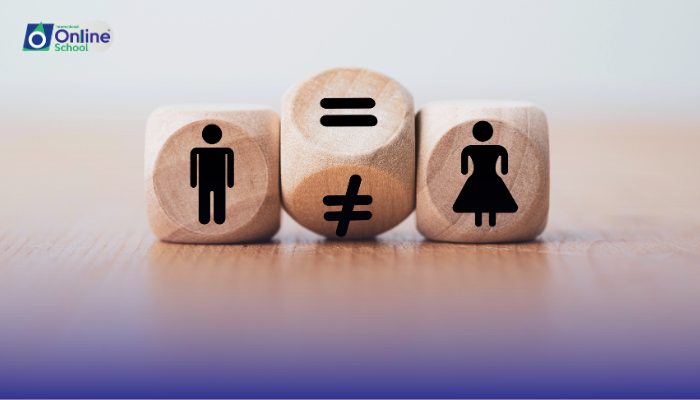
For the building of a just and equitable society equality between men and women is the foremost imperative, but unfortunately, in spite of all the efforts made by the Prophets and reformers, the human society has, so far, failed to achieve this objective. The West, in this respect, notwithstanding all its professions and high sounding claims, is in no better position than the East. The western world has exploited the women in the name of emancipation and deprived her of her natural purity. According to a survey conducted lately in the UK 98% of the women expressed an earnest desire to return to their family life, but found them helpless because neither the husband nor the father was ready to welcome them back. Lot of the woman in the backward and less literate societies is no better than the so called civilized societies, but the nature of problems faced by them is certainly different. If we cast a glance at our society we find our women suffering from several problems i.e. 


i. Women is considered a creature of lesser status, her birth is a burden for the family, events of turning women out of their homes only because they had given birth to a female child, are very common. 


ii. Women are made to work as peasants and field labour in our rural areas. So women are performing double responsibilities in the rural areas. 


iii. In the feudal setup, status of women is even worse; she is confined within the affet fortress like boundaries of the feudal houses like slaves. 


iv. Honour killing of women is now a common practice. Our social system is generally inclined to favour men, woman is convicted notwithstanding the fallacy of the charge levied against her, and woman is not even given a chance to plead innocent in the court of law. 


v. In our country literacy rate in the lower income groups is generally very low, in women it is even lower. Women Literacy rate is very low in the rural areas, as compared to the urban areas. 


vi. Women are not provided adequate legal and constitutional safeguards of their rights, leaders of the public opinion also make high sounding claims about these rights, but all this has failed to better the women's lot. 


vii. Underage Marriages are very Common and this creates problems for women. 


viii. Islam provides inheritance privilege to the women but practically women are deprived of their financial rights, women have to face serious economic problems in their entire life. 


Apparently the women have been provided adequate legal and constitutional safeguards, yet the social taboos remain interposed between them and justice. 


In a country where more than 96 percent of the people adhere to Islam, the faith which is the greatest protagonist of gender justice, this dismal state of affairs is very alarming. It is neither sanctioned by the civilized standards of humanity in general, no approved by Islam or any other religion of the world. 


Aamir Khan

Aamir Khan

Product Designer

Class Sessions

1- Lesson 01: Ideology 2- Lesson 02: Components of the Pakistan Ideology 3- Lesson 03: Pakistan: The Outcome of Sustained Muslim Efforts 4- Lesson 04: The Aligarh Movement 5- Lesson 05: Establishment of the All India Muslim League 6- Lesson 06: The Khilafat Movement: Events and Outcomes 7- Lesson 07: Khilafat Movement: Results and Consequences 8- Lesson 08: The Pakistan Resolution 9- Lesson 09: The Cripps Mission 10- Lesson 10: Election 1945-46 11- Lesson 11: The Cabinet Mission Plan 12- Lesson 12: The Simla Conference 13- Lesson 13: The Third June Plan 14- Lesson 14: Indian Independence Act 15- Lesson 01: Background of Initial Problems 16- Lesson 02: Problems of the New Born State of Pakistan 17- Lesson 03: Accession of the Princely States 18- Lesson 04: Efforts for Resolving the Problems 19- Lesson 05: National Solidarity and Stability 20- Lesson 01: Location 21- Lesson 02: Temperature Zones 22- Lesson 03: Imbalanced Economic Growth and Regional Disparities 23- Lesson 05: Tourist Attractions in Pakistan 24- Lesson 06: Map-Reading 25- Lesson 04: Pakistan's Geo-Strategic Position 26- Lesson 01: The Objectives Resolution 27- Lesson 02: Islamic Provisions of the 1956 Constitution 28- Lesson 03: Islamic Provisions of the 1962 Constitution 29- Lesson04: Islamic Provisions of the 1973 Constitution 30- Lesson 05: Steps towards Islamization (1949-1977) 31- Lesson 06: Steps towards Islamization (Since 1977) 32- Lesson 07: Rights and Responsibilities (Duties) 33- Lesson 08: Human Rights 34- Lesson 09: Fundamental Human Rights Adopted by the UN 35- Lesson 01: Administrative Structure of Pakistan 36- Lesson 02: Organs of the Federal Government and their Functions 37- Lesson 03: Provincial Governments: Their Powers and Functions 38- Lesson 04: Concept of Good Governance in Islam 39- Lesson 01: Culture of Pakistan 40- Lesson 02: Important Ancient Sites of Cultural Significance 41- Lesson 03: Important Buildings of the Muslim Period 42- Lesson 04: Common Characteristics of the Pakistani Culture 43- Lesson 05: Gender Equity: Issues and Problems 44- Lesson 06: Rights of Women in Islam 45- Lesson 07: Policies for Women Participation In Socio-Political Affairs of Pakistan 46- Lesson 01: Languages of Pakistan 47- Lesson 02: CHARACTERISTIC FEATURES OF URDU 48- Lesson 03: Regional Languages of Pakistan 49- Lesson 01: MEANING OF NATIONAL INTEGRATION 50- Lesson 02: Significance of National Integration in an Islamic Democratic State 51- Lesson 03: Problems of National Integration in Pakistan 52- Lesson 01: What is planning? 53- Lesson 02: Economic Planning in the Light of Five Year Plans 54- Lesson 03: Economic Planning in Pakistan: a Bird's Eye View 55- Lesson 01: WHAT IS FOREIGN POLICY? 56- Lesson 02: Factors Determining the Foreign Policy of Pakistan 57- Lesson 03: Pakistan's Foreign Relations with China 58- Lesson 04: Islamic Republic of Pakistan and India 59- Lesson 05: Islamic Republic of Pakistan and Iran 60- Lesson 06: Islamic Republic of Pakistan and Afghanistan 61- Lesson 07: Islamic Republic of Pakistan and Saudi Arabia